The best option depends first on your dog's behaviour. A calm small dog, an athletic large dog, and a dog that digs do not need the same fence. Before choosing a model, consider size, energy level, jumping ability, digging habits, and reactions to people or other dogs passing by.
Height matters, but it is not the only factor. Ground clearance, gate type, post strength, and visibility through the fence can all make a major difference.
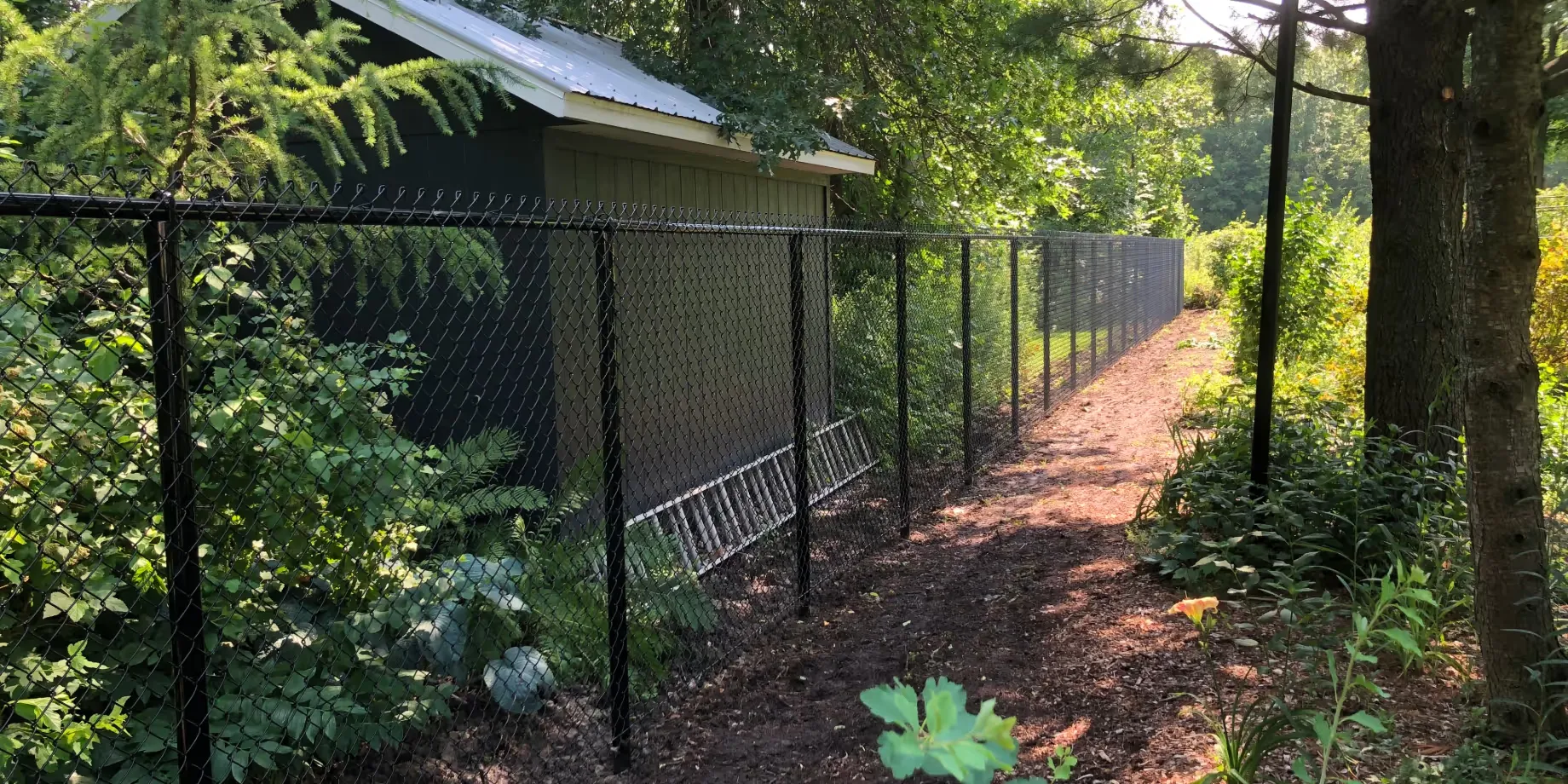
Chain link fencing is one of the most common solutions for keeping a dog safely in the yard. It is strong, durable, affordable, and keeps the property visually open.
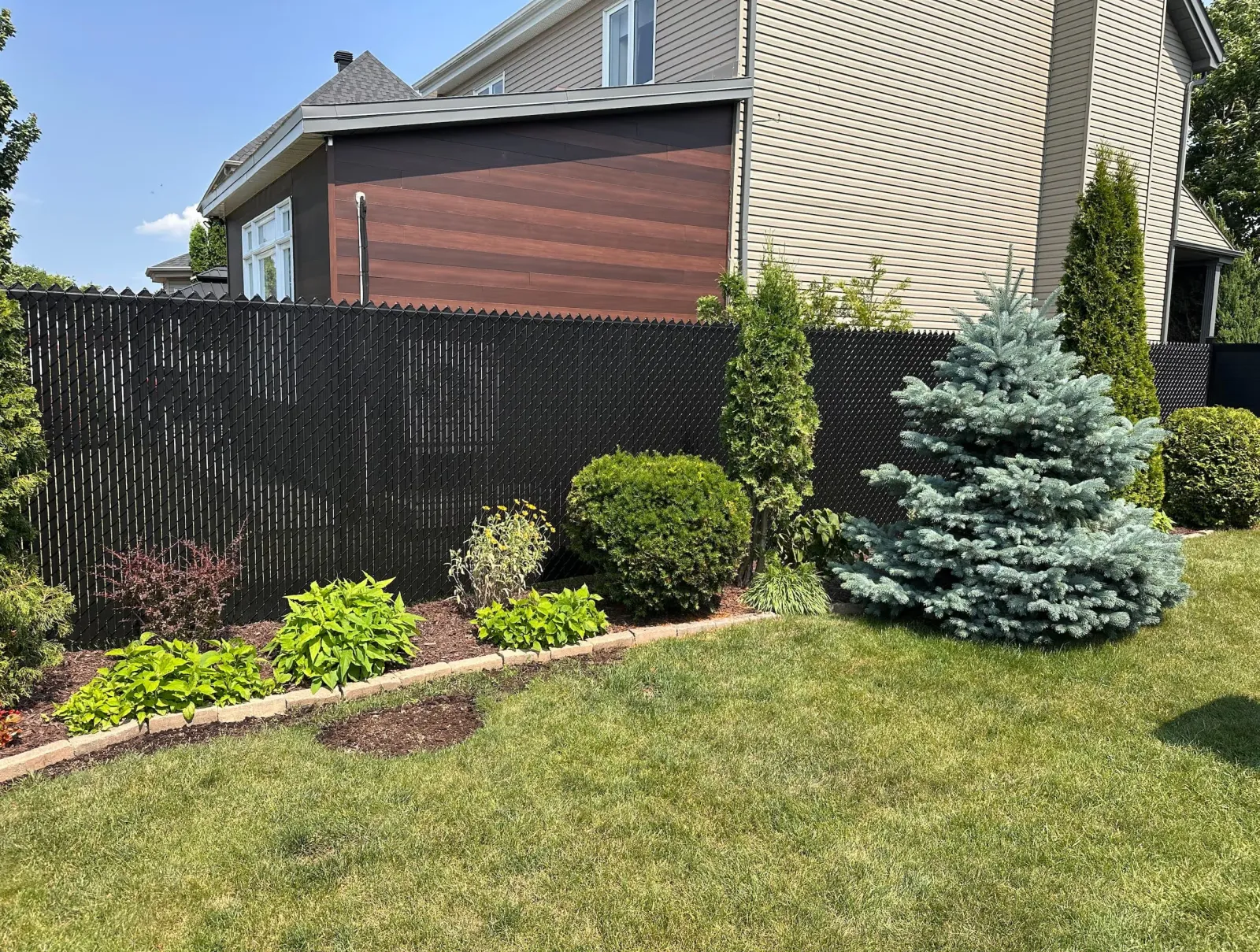
It works especially well for large lots, active dogs, and homeowners who want to secure the yard without fully blocking the view. Privacy slats can also be added to reduce visual distractions from the street or neighbouring properties.
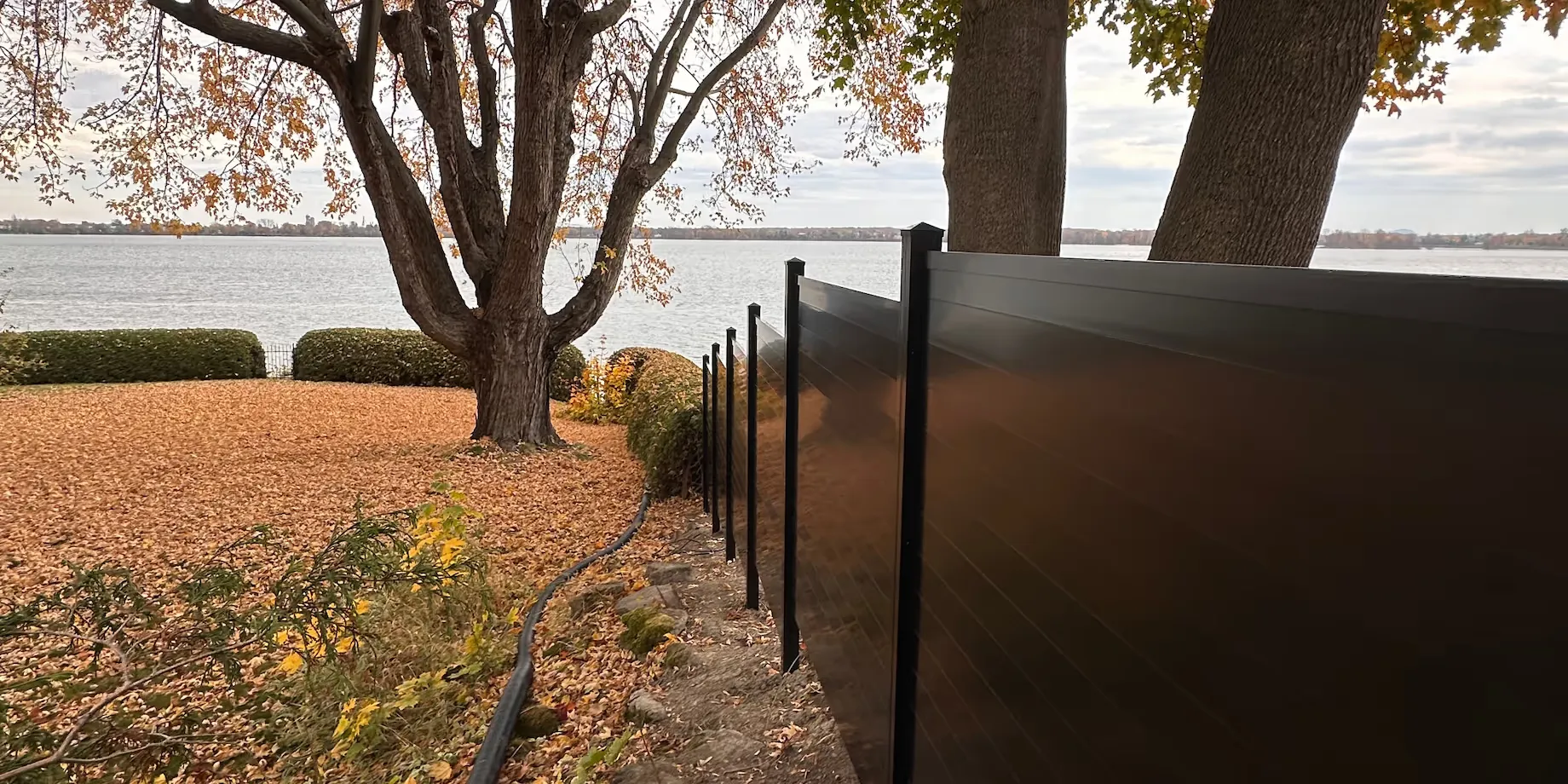
PVC and composite fences create a more opaque barrier. That can help with dogs that bark at pedestrians, bikes, or neighbouring dogs.
These options also give the family more privacy. They usually cost more than chain link, but they can make the backyard feel calmer if your dog reacts strongly to what it sees outside the property.
An ornamental fence can be beautiful for defining a property line, but it is not our first choice for keeping a dog safely in the yard. The spacing between pickets and the gap below the fence can become weak points, especially with a small dog, a nervous dog, or a dog that actively tries to get out.
If the main goal is dog safety, chain link, PVC, or composite are better places to start. Ornamental fencing may work for a decorative project or a yard that is already well controlled, but it is not the option to recommend when the dog is the priority.
A secure fence can fail if the gate is not well chosen. The latch should be solid, easy to close, and positioned to prevent accidental openings. If several people use the yard, the gate needs to close reliably and avoid being left slightly open.
This is an important detail to plan from the beginning of the project. Gate placement affects circulation in the yard, access to the pool, shed, driveway, and the areas where the dog goes out most often.
Some dogs do not try to jump over a fence. They try to go under it. In that case, the bottom of the fence becomes just as important as the height. Ground gaps should be minimized, soft soil near the fence should be managed, and landscaping should be planned with the dog in mind.
Every yard is different. A slope, border, garden bed, or old hole can create a weak spot. A proper installation accounts for these details before the work begins.
For many residential yards, a 4 to 6 foot fence can work depending on the dog, the location, and municipal bylaws. Larger, more nervous, or high-jumping dogs often benefit from a taller fence.
Always verify your city's rules before choosing. Permitted heights can vary by front yard, backyard, pool area, and the exact location where the fence will be installed.
For a strong balance of price, durability, and safety, chain link is often the most logical fence for a dog. For a more private and calmer yard, PVC, composite, or chain link with privacy slats may be the better fit.
The right choice depends on your yard, your budget, and your dog's behaviour. The goal is to choose a height, material, and gate layout that match your property, not just the most popular fence model.